
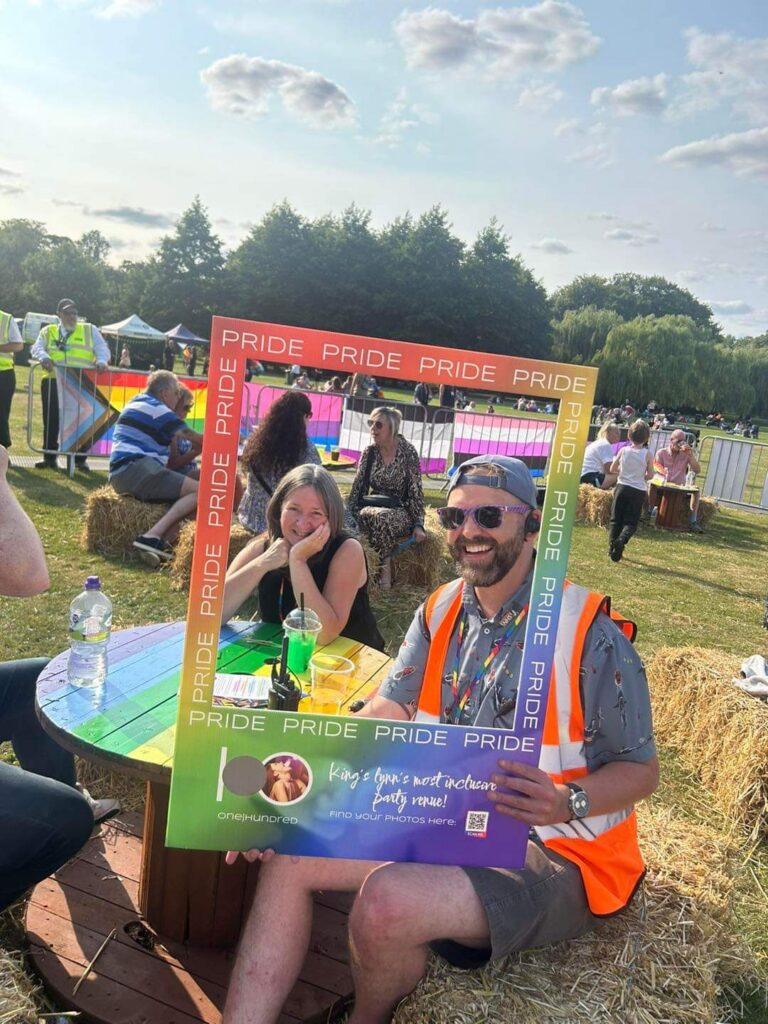
I was genuinely taken aback reading Councillor Coates glib column on the Equality Calendar motion, published on the eve of King’s Lynn’s annual Pride event. The timing alone made the tone of the piece feel particularly out of step with the inclusive spirit many in our community work hard to foster.
I’ll start by agreeing on one point: the specific calendar should indeed have been referenced in the motion to avoid confusion. Cllr. Coates could have been collegiate and asked for a specific calendar to be referenced through standing orders or additional motions in the ample time between receiving it and the meeting… But that likely wouldn’t have been a behaviour in keeping with much of the rest of the article’s tone, which sadly reflects the kind of pedantry and point‑scoring that has long plagued local government (often being sneering or petty around standing order and process), which often results in councils that are not representative of the communities they serve- It doesn’t look like a rewarding or constructive place to be. Women remain underrepresented at local-government level (51% of the UK population is female, vs approx 36% of UK councillors). 63% of the UK is of ‘working age’, and around 19% aged 64 or over – yet more than 40% of UK councillors are retired. These are real issues of representation—not abstract ones. If councils and politicians leave this un-addressed, these inequalities will continue to add to the feeling that most of us feel: that politics isn’t for us, or working for us.
An even more constructive approach would be to ask council staff which calendar they would prefer to follow. Many employees of the Borough Council are members of UNISON, as are hundreds of thousands of local government workers across the UK.
Their Equality Calendar is widely used and grounded in UK‑specific context.
For example, the anniversary of George Floyd’s murder does not appear on the UNISON calendar, nor on any of the reputable UK‑based equality calendars I checked. Stephen Lawrence’s death does, and rightly so, given the profound impact of the Lawrence Inquiry on British policing and race relations. It is important that what happened should never be forgotten.
World Hijab Day is also absent, but Islamophobia Awareness Month is included, reflecting the fact that it is needed more than ever as anti‑Muslim hate crimes in the UK have surged to record levels. Although this calendar does not include it, how petulant to single out a small religion to make a flawed point. Cllr Coates could answer the question himself around the Baha’is in Norfolk during one of his voracious Googling sessions.
(Thanks for bringing up the Baha’i religion, I didn’t know much about it, but was pleased to be curious and look into it. What an interesting and cool values based practice!)
These examples matter because they highlight the importance of using UK‑based sources rather than American ones. Unfortunately, the selective examples in Cllr. Coates’ column echo the kind of American‑style culture‑war politics increasingly imported into British discourse by certain party leaders. It does little to help residents understand the real purpose of equality work.
Some examples of social injustices here in the UK:
- Autistic people face a significant employment gap with only 3 in 10 in work;
- the LGBTQ+ community still faces significant mental health disparities;
- there is still a gender pay gap, etc etc
We are not quite ready for the meritocratic utopia the article seemed to crave. Without maintaining our curiousity and awareness, along with geographic areas falling behind, we risk entire communities still being subjected to regression.
All parties are capable of identifying problems, but too often the solutions are oversimplified or avoided entirely. That has been a recurring theme in politics for decades. Legitimate concerns about equality, diversity and inclusion should focus on fairness, implementation and British values—not on cherry‑picked outliers that distract from the broader picture; Pictures that are best viewed whole, rather than zooming in on specific truths or interpretations. For example there has been strong hyperbole around recruitment directives at Cambridge University (which now has a tragic element to it). Clearly there is valid controversy and there are some issues with policies; but it is also true that of senior university staff in the UK, around 1% are black, whereas around 4% of the UK population is black… Another inequality. As with politics, it is important that academia is representative of the wider nation, and as of yet it is not.
We have seen, through inquiries such as the infected blood, post-office and Hillsborough scandals, how vital independent scrutiny is in bringing communities together. Yet issues involving race or minority characteristics such as the Stephen Lawrence Inquiry and investigations into grooming gangs are frequently treated as divisive rather than as opportunities for learning and improvement.
Specific examples should not be used to dilute or delegitimise the reality that discrimination and exclusion still affect thousands of people in this country. This is not “woke” or “snowflake”—it is simply recognising that empathy requires imagining how we would feel if we developed a disability; if were born into a different background; or were made to feel shame for loving someone we are legally entitled to love.
Community leaders have a responsibility to represent all residents, not just those whose characteristics they personally approve of. Free speech matters of course, but so do the Nolan Principles. Recent attempts by Norfolk Reform to weaken those principles in the County Council arena raises an obvious question: why is saying discriminatory things so important to some? Times change. Society progresses. The same people who lament that “you can’t hit your kids anymore” rarely stop to ask why they feel the need to (hit kids).
Progress shouldn’t stop at technology/medicine/science—it should extend to how we treat one another. It is important that public figures set positive examples and messages, rather than this relentless and hopeless durge if cynicism. Illustrating the importance of change is as much caring about those who are on the end of social injustices as much as those who feel they are being left behind by change. It’s all stick, and no carrot right now.
Finally, Coates’ criticism of the recorded vote is misplaced. Transparency is essential. Many residents value knowing how their councillors vote on issues that matter to them. A recorded vote is not divisive; it is democratic. Again, being constructive, is there a reason ‘Notices of Motion’ (being as there are rarely more than 2 or 3) from outside of the agenda ‘Recommendations from Council Bodies’ can’t all be recorded in future? That’s the fairest thing to do as it’s not selective.
I hope future columns in Lynn will engage more constructively with better faith around equality and diversity issues and reflect the lived realities of the people you serve. Meanwhile, for anyone who wants to work together constructively to better our community and area, please do give North West Norfolk Labour a look.
Andy Riley.
Chair, North West Norfolk Labour